Light allows us to see and takes part in the organisation of biological rhythms. In the retina, photobiology and neuroscience meet: light information reaches the brain and helps synchronise the body with the cycle of day and night.
Cones, rods and ganglion cells containing melanopsin contribute, together, to informing the body about the light in the environment. This information reaches the suprachiasmatic nucleus, in the hypothalamus, which acts as the body's central clock, coordinating biological rhythms and their synchronisation with the cycle of day and night.
This communication between the retina and the brain depends on the characteristics of the light that reaches the eyes. Two light sources with the same colour temperature can have different spectral compositions and stimulate the photoreceptors of the retina differently.
In lighting design, understanding this response requires considering, beyond colour temperature, the intensity and spectrum of the light, and the duration and timing of exposure. These factors guide the creation of lighting conditions suited to people and to the different periods of day and night.
This alternation also guides the design concept.
During the day, light contributes to signalling the period of activity. At night, its reduction helps preserve the difference between the phases of the cycle. Simply warming the colour temperature may not be enough when light exposure remains high.
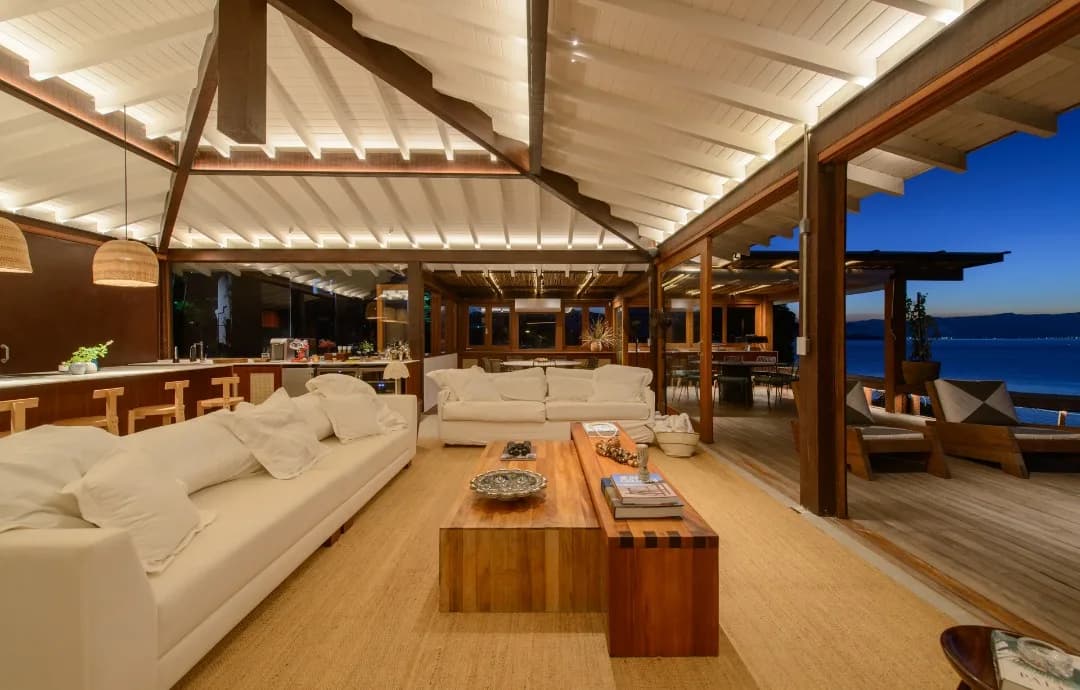
The night-time condition deserves a design of its own. Meals, time together, preparing for sleep and moving around in the small hours have distinct needs. Dim light, when compatible with the activity and with safety, is a legitimate condition of the space.
Understanding people, interpreting their routines and materialising lighting conditions that follow these changes is part of Integrative Lighting. Lighting control systems make it possible to adjust the space to the temporality of life.
At WeLight, we design the night with the same care given to the day, placing light in dialogue with people and architecture.
YOU THINK. WE LIGHT.